AI vs Human Writing: Can You Tell the Difference?
Most people think they can spot AI writing. They're wrong about a third of the time. But the gap between AI-generated content and human-written content isn't just a parlor trick question — it has real consequences for rankings, trust, and reader engagement.
A 2025 Semrush study found that human-written content holds the #1 Google position 80% of the time, compared to just 9% for pure AI content. That's not a small edge. It's a canyon. And it tells us something important: search engines and readers can tell the difference, even when we think we can't.
This article breaks down exactly what separates AI writing from human writing, how detection tools exploit those differences, and why the smartest approach in 2026 is using both together.

Key Takeaways
- Human content holds the #1 Google position 80% of the time vs. 9% for pure AI content (Semrush, 2025).
- AI writing is detectable through low perplexity, uniform sentence length, and predictable transitions.
- 85% of marketers now use AI for content creation, with 83% reporting productivity gains.
- The hybrid approach — AI draft plus human editing — is the 2026 consensus for quality and speed.
- Simple edits like varying sentence length and adding personal anecdotes can make AI text pass detection.
What Makes AI Writing Different?
AI writing follows patterns. Not because the models are lazy, but because they're optimized to produce the most statistically likely next word at every step. That optimization creates a fingerprint. It's subtle, but it's consistent across almost everything AI produces.
Predictable word choices
Language models pick words that have the highest probability given the context. That means AI text gravitates toward common phrases and safe constructions. You'll see "plays a crucial role" instead of "matters a lot." You'll see "a wide range of" instead of "all kinds of." Each individual choice sounds fine. Stacked up across 500 words, they create a flatness that readers feel even if they can't name it.
Uniform sentence length
Read a paragraph of ChatGPT output. Count the words in each sentence. You'll find they cluster between 15 and 22 words. There are few three-word punches. Few 40-word run-ons that a human might throw in because the idea got away from them. AI keeps it tidy. Humans don't.
Hedging language and filler
AI loves to hedge. "It is worth noting." "This is particularly important." "There are several factors to consider." These phrases don't add information. They pad the output and signal uncertainty in a way that trained readers notice immediately. A human expert just states the thing. AI wraps it in cotton.
Formulaic transitions
Every paragraph starts the same way in AI text. "Additionally." "Moreover." "Furthermore." Human writers skip transitions entirely when the logic is obvious, or they use unexpected bridges. AI follows the essay template it learned from millions of training documents.
No lived experience
This is the biggest tell. AI can't say "I tried this and it failed" and mean it. It can't reference a conversation from last Tuesday. It can't describe the specific frustration of debugging a problem for six hours. When AI writes about experiences, it fabricates generic ones. Readers sense the hollow ring.
What Makes Human Writing Stand Out?
Human writing is messy, variable, and surprising — and that's exactly what makes it work. The qualities that make writing feel authentic are the same ones that AI models struggle to replicate because they require genuine experience and intentional rule-breaking.
Burstiness
Humans write in bursts. A long, complex sentence about the technical details of an argument. Then a short one. "That's the point." The variation isn't random. It's rhythmic. It creates emphasis. AI produces a more uniform texture, like a wall painted one color. Human writing is a collage.
Personal anecdotes
When a human writer says "I spent three weeks testing AI detectors for this article," you get specificity that no model can fabricate. Real details — dates, names, sensory observations — create trust. They tell the reader that someone actually did the work instead of generating plausible text about doing it.
Unexpected word choices
Human writers pick weird words sometimes. They use slang. They coin phrases. They write "the algorithm barfed" instead of "the algorithm produced an error." These choices register as low-probability tokens to a language model, which is exactly why they read as human. We break rules because we can.
Emotional texture
Frustration, excitement, doubt, humor — human writing carries emotional weight that shifts within a single paragraph. AI can mimic emotion, but it applies it evenly, like a filter on a photo. Real emotion is uneven. It shows up in word choice, sentence length, and the decision to say something blunt instead of diplomatic.
Domain expertise and cultural context
A human SEO specialist references a specific Google algorithm update and what it did to their client's traffic. A human chef describes how a dish smells differently in July than in December. This kind of contextual knowledge, grounded in real experience, is what Google's E-E-A-T framework rewards — and what AI consistently lacks.

The Detection Game: How Tools Spot AI Writing
AI detection tools exploit the statistical patterns described above. They don't read for meaning. They measure math. Understanding how they work helps you see why some AI text gets caught and some doesn't. For a deeper technical breakdown, see our guide on how AI detection works.
Perplexity scoring
Perplexity measures how predictable each word is given the words before it. AI text scores low — the words are exactly what you'd expect. Human text scores higher because real people make surprising choices. A sentence like "the quarterly results were, frankly, a disaster" has higher perplexity than "the quarterly results indicated a decline in performance." Same meaning. Different predictability.
Burstiness analysis
Detectors calculate how much sentence length and complexity vary across a document. High variation signals human authorship. Low variation signals AI. This metric is why a document full of 18-word sentences gets flagged even when each sentence individually sounds natural.
How the major tools compare
GPTZero combines perplexity and burstiness scoring and claims 99% precision in controlled testing, though a 2024 University of Maryland study found real-world precision closer to 84%. Turnitin layers AI detection onto its existing plagiarism database, cross-referencing statistical patterns with source similarity. Originality.ai checks against multiple AI models simultaneously and returns a percentage score rather than a binary verdict.
None of them are perfect. A Stanford study found that these tools flag non-native English speakers at significantly higher rates — a serious equity problem in educational settings. The tools measure patterns, not intent.
Where AI Writing Excels
AI writing isn't worse at everything. For specific use cases, it's dramatically better than starting from scratch — and ignoring its strengths means leaving real productivity on the table.
Speed
AI generates a 1,000-word draft in under 30 seconds. A human writer takes 2–4 hours for the same length. That's roughly 90% faster for a first draft, according to HubSpot's 2025 State of Marketing report. For teams producing high volumes of content, that speed advantage is transformative.
Consistency
AI doesn't have bad days. It doesn't get tired at 4 PM and start writing worse sentences. For brand voice guidelines, product descriptions, and templated content, AI maintains a level of consistency that's hard for human teams to match across dozens of writers.
Scale
According to a 2024 Salesforce survey, 85% of marketers now use AI for content creation. Of those, 83% say it's increased their productivity. When you need 200 product descriptions or 50 email variations, AI handles the volume without burning out a writing team.
Data summarization
AI is genuinely excellent at turning structured data into readable summaries. Financial reports, research abstracts, meeting notes — tasks where the source material is clear and the output format is predictable. These are AI's sweet spot because creativity isn't the goal. Accuracy and clarity are.
Where Human Writing Wins
Human writing dominates in every category that requires trust, depth, or genuine expertise. The 8x gap in #1 Google rankings between human and AI content isn't accidental — it reflects what readers and algorithms both value.
Trust and credibility
Readers trust content that shows evidence of real experience. A product review that mentions a specific flaw discovered after three weeks of use carries weight that no AI-generated review can match. Google's helpful content guidelines explicitly reward first-hand experience.
Storytelling
Stories need surprise. They need a narrator who makes choices — what to include, what to leave out, when to pause. AI tells stories like a committee wrote them: competent, complete, and forgettable. The best human writing sticks because it took risks the algorithm wouldn't.
SEO performance
The Semrush data makes this clear. Human content doesn't just rank more often — it ranks higher. That 80% vs. 9% gap at position #1 likely reflects engagement signals: human content gets more time on page, more shares, and more backlinks because it delivers value that feels real. If you're after rankings, human involvement isn't optional.
Nuance and controversy
AI avoids taking positions. It hedges, qualifies, and presents both sides even when one side is clearly stronger. Human writers pick a stance and defend it. That's what creates engagement. A blog post that says "here are some things to consider" gets less engagement than one that says "this approach is wrong, and here's why."
The Hybrid Approach: Best of Both Worlds
The debate between AI and human writing is already outdated. The 2026 consensus among content professionals is clear: use both. The question isn't "which is better" but "how do you combine them effectively?"
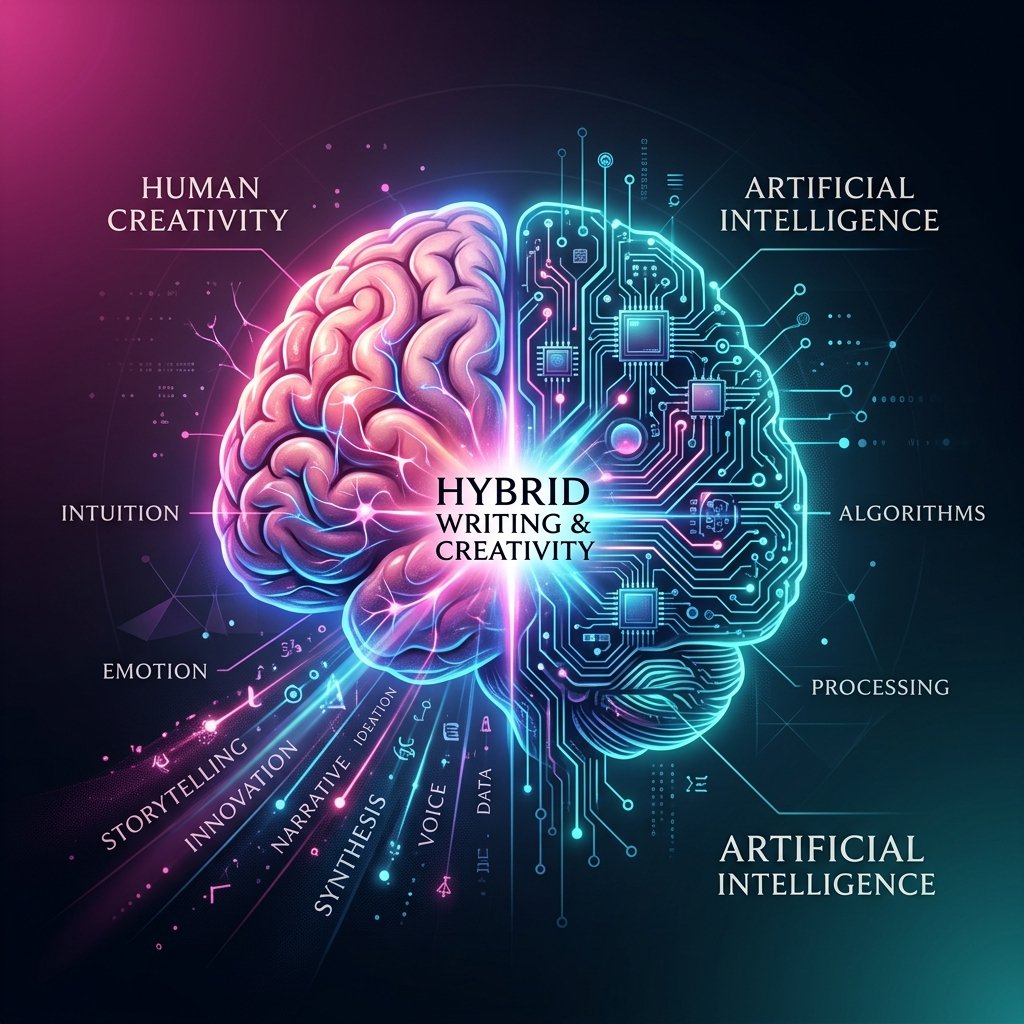
The AI-draft, human-edit workflow
The most effective workflow looks like this:
- Research and outline — Human defines the angle, key points, and unique insights.
- AI draft — Generate a first draft covering the outlined structure. This saves 60–70% of writing time.
- Human rewrite — Add personal anecdotes, rewrite flat sections, vary sentence rhythm, inject opinion and expertise.
- Humanize — Run through an AI humanizer to catch remaining patterns that detection tools flag.
- Final edit — Human review for accuracy, voice, and readability.
This process produces content that's faster to create than pure human writing and higher quality than pure AI output. It's not a compromise. Done well, it's better than either approach alone.
When to lean toward AI
Use AI more heavily for: first drafts, product descriptions, data-driven content, internal documentation, and social media post variations. These tasks prioritize speed and consistency over originality.
When to lean toward human
Use human writers more heavily for: thought leadership, case studies, personal essays, controversial takes, and any content where E-E-A-T signals determine rankings. These tasks require experience and judgment that AI can't simulate.
How to Make AI Writing Sound More Human
If you're using AI for drafts — and you should be — here's how to close the gap between AI output and content that reads as authentically human. These techniques target the specific patterns that both readers and detection tools use to identify AI text. For a full walkthrough, see our guide on how to humanize AI text.
Vary your sentence length
This is the single most effective change. Go through the AI draft and break some sentences into fragments. Combine others into longer, more complex structures. Aim for a mix: 5-word sentences next to 30-word sentences. Read it aloud. If it sounds like a metronome, keep editing.
Add personal details
Insert specific experiences, observations, or opinions that only you could write. "I tested this on three client projects last quarter" beats "this approach has been shown to be effective." Specificity is the enemy of AI-sounding text.
Remove AI filler words
Search your draft for: "It is important to note," "Additionally," "Moreover," "In conclusion," "plays a crucial role," and "a wide range of." Delete them or replace them with something less formulaic. These phrases are AI writing's calling card.
Read it aloud
This simple test catches more AI patterns than any other editing technique. If a sentence feels awkward to say out loud, rewrite it. Humans don't speak the way AI writes. Your ear knows the difference even when your eyes miss it.
Use an AI humanizer tool
After your manual edits, run the text through a dedicated tool. The best AI humanizer tools target perplexity and burstiness specifically, adjusting the statistical fingerprint without changing meaning. Think of it as the final polish after you've done the structural work. This is especially useful for humanizing ChatGPT essays where detection stakes are high.
Frequently Asked Questions
Can you tell the difference between AI and human writing?
Trained readers spot AI writing about 60–70% of the time. The giveaways are uniform sentence lengths, predictable transitions, and hedging phrases. Detection tools perform better — top platforms claim 85–99% accuracy — though real-world results vary based on content type and how much editing the AI text received.
Is AI writing as good as human writing?
For speed and consistency, AI excels. For trust, storytelling, and SEO rankings, human writing wins. A Semrush study showed human content holds position #1 on Google 80% of the time versus 9% for pure AI. The best results come from combining both in a hybrid workflow.
Does Google penalize AI content?
Google doesn't penalize content solely for being AI-generated. Their official policy focuses on quality regardless of production method. But low-quality AI content lacking expertise and originality performs poorly. Google's March 2024 core update specifically targeted mass-produced AI content with little value.
How do AI detectors tell the difference?
Detectors measure two core signals: perplexity (how predictable word choices are) and burstiness (how much sentence complexity varies). AI text scores low on both because language models favor statistically likely sequences and produce uniform structures. Learn more about how AI detection works.
What percentage of content is AI-generated?
Estimates range widely. Originality.ai reported roughly 57% of web content showed signs of AI involvement as of late 2025. A separate Europol report estimated 90% of online content could be AI-generated or AI-assisted by 2026.
The Bottom Line
AI writing and human writing aren't competing anymore. They're converging. The smartest content creators in 2026 use AI for speed and humans for soul — then blend the two until the seams disappear.
The data is clear: pure AI content underperforms in search rankings, reader trust, and engagement. Pure human content is too slow for modern production demands. The hybrid model wins.
Start with AI. Edit like a human. Run your output through a humanizer for that final layer of polish. The gap between AI and human writing is real, but it's also closable — if you know where the differences are and how to fix them.